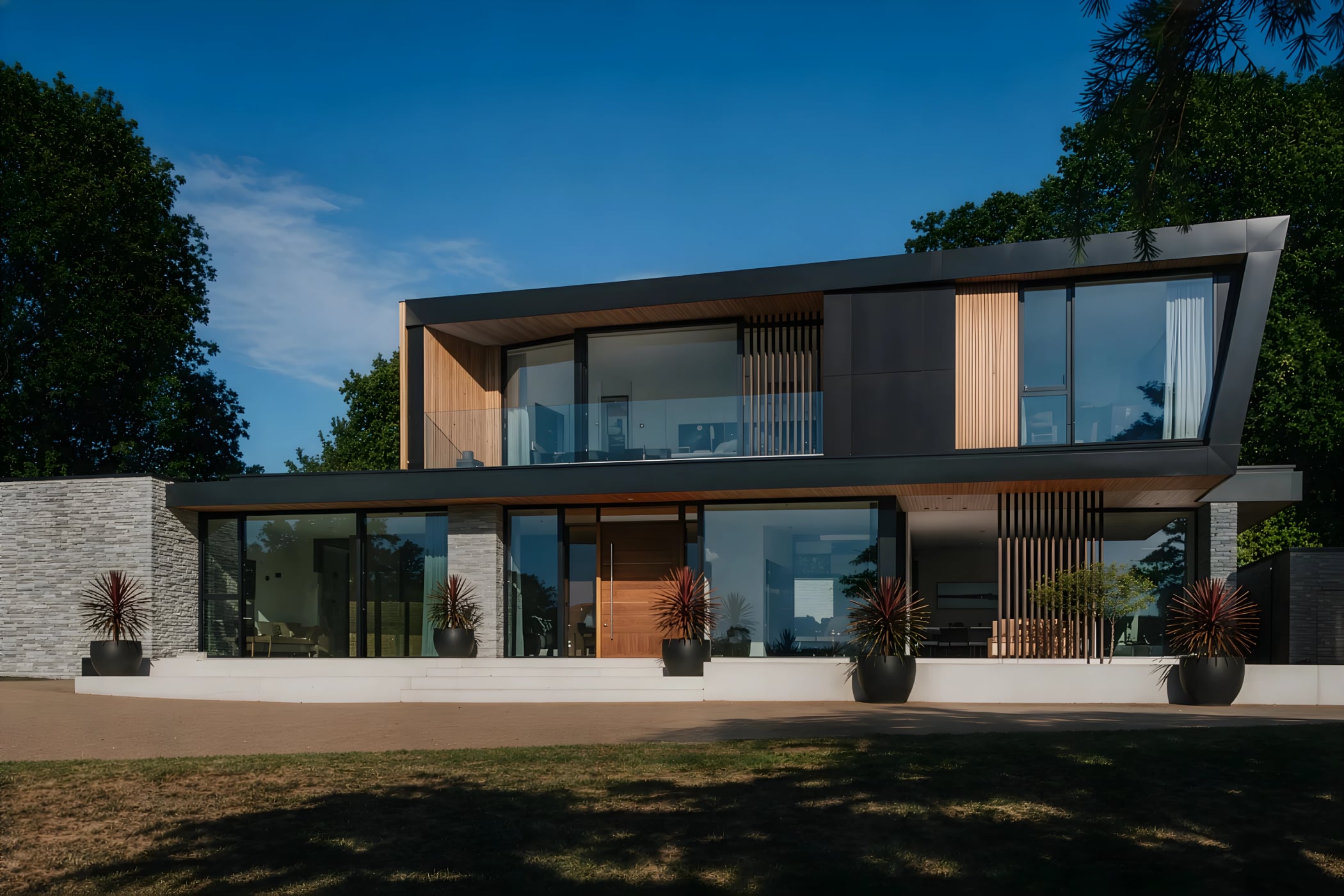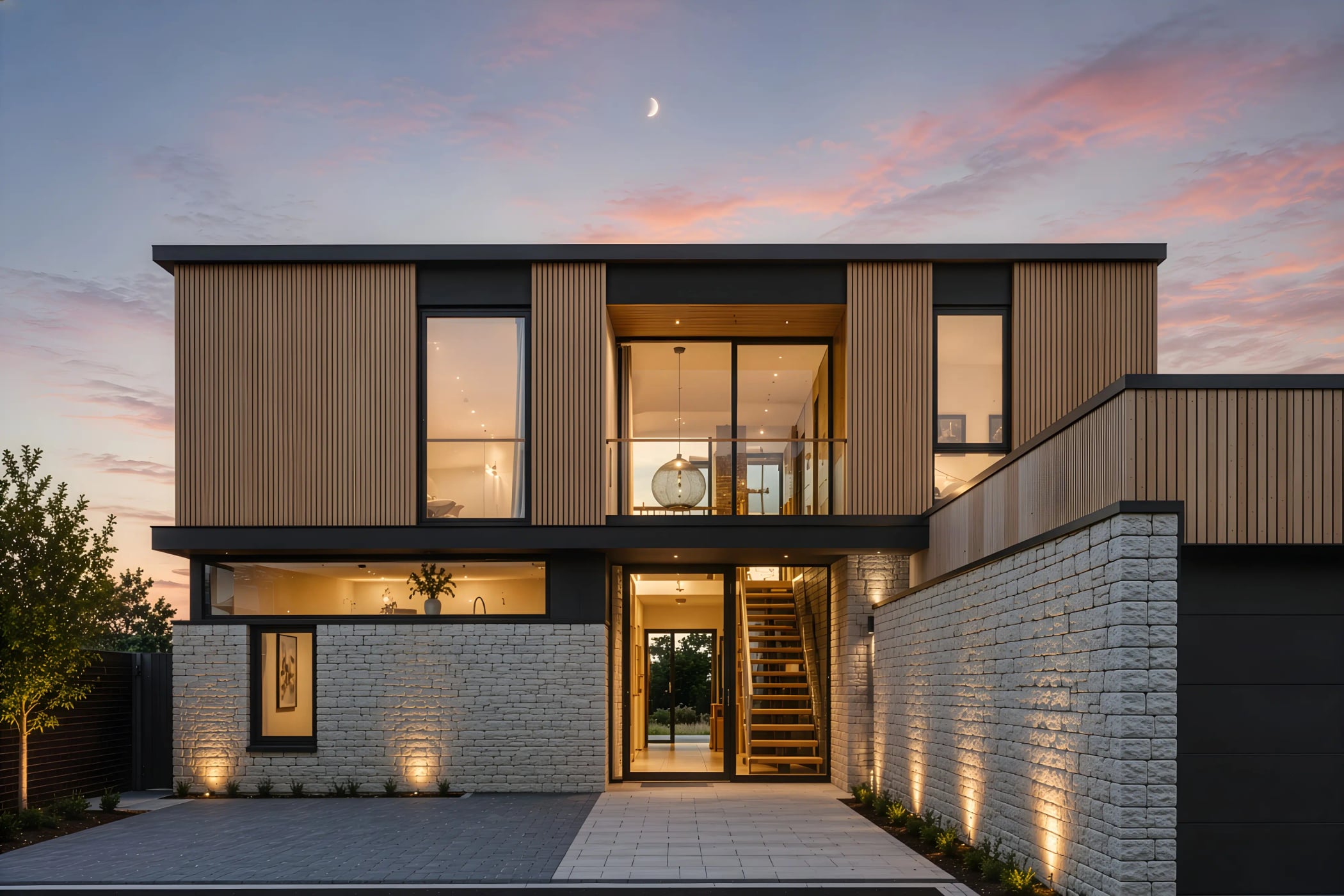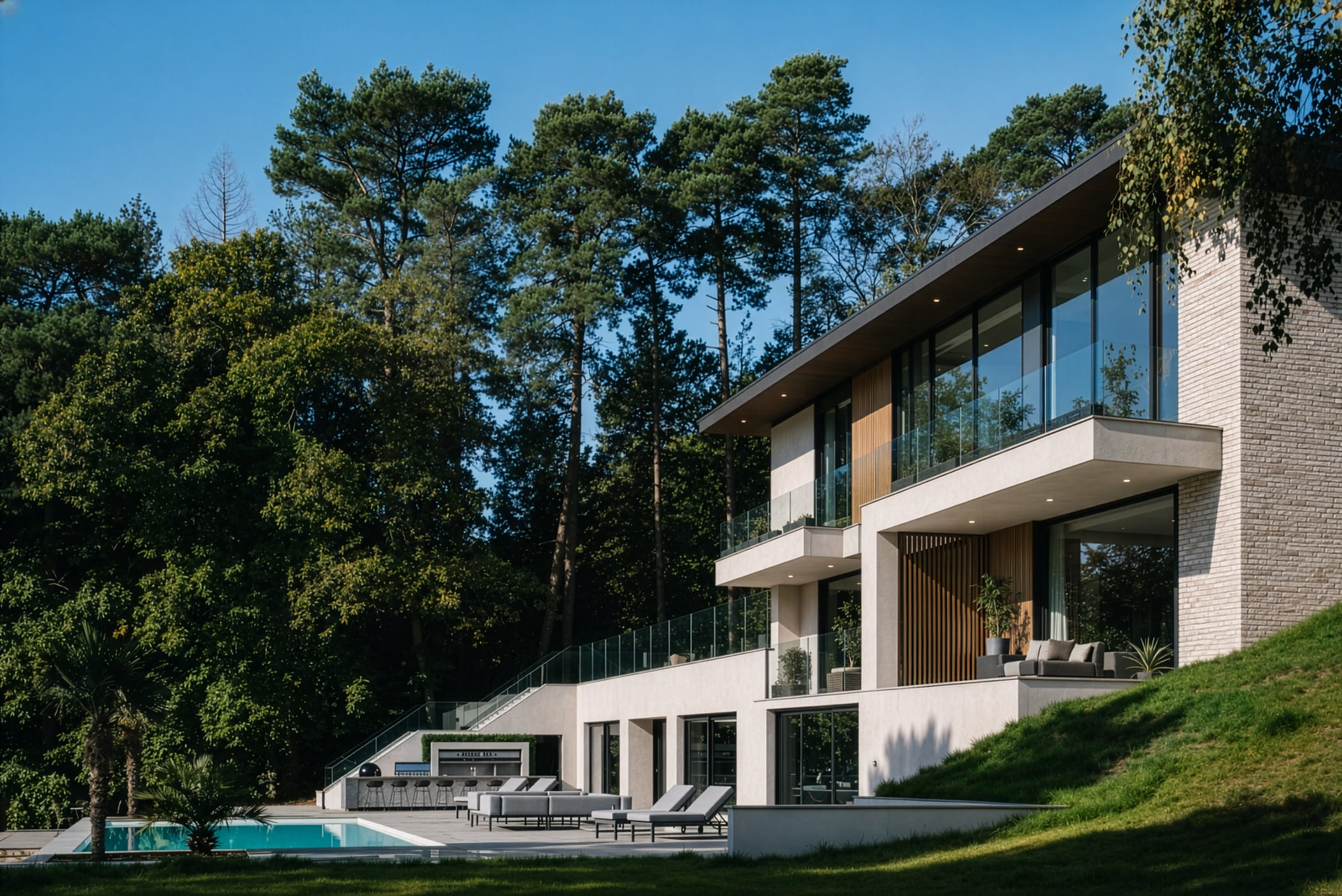
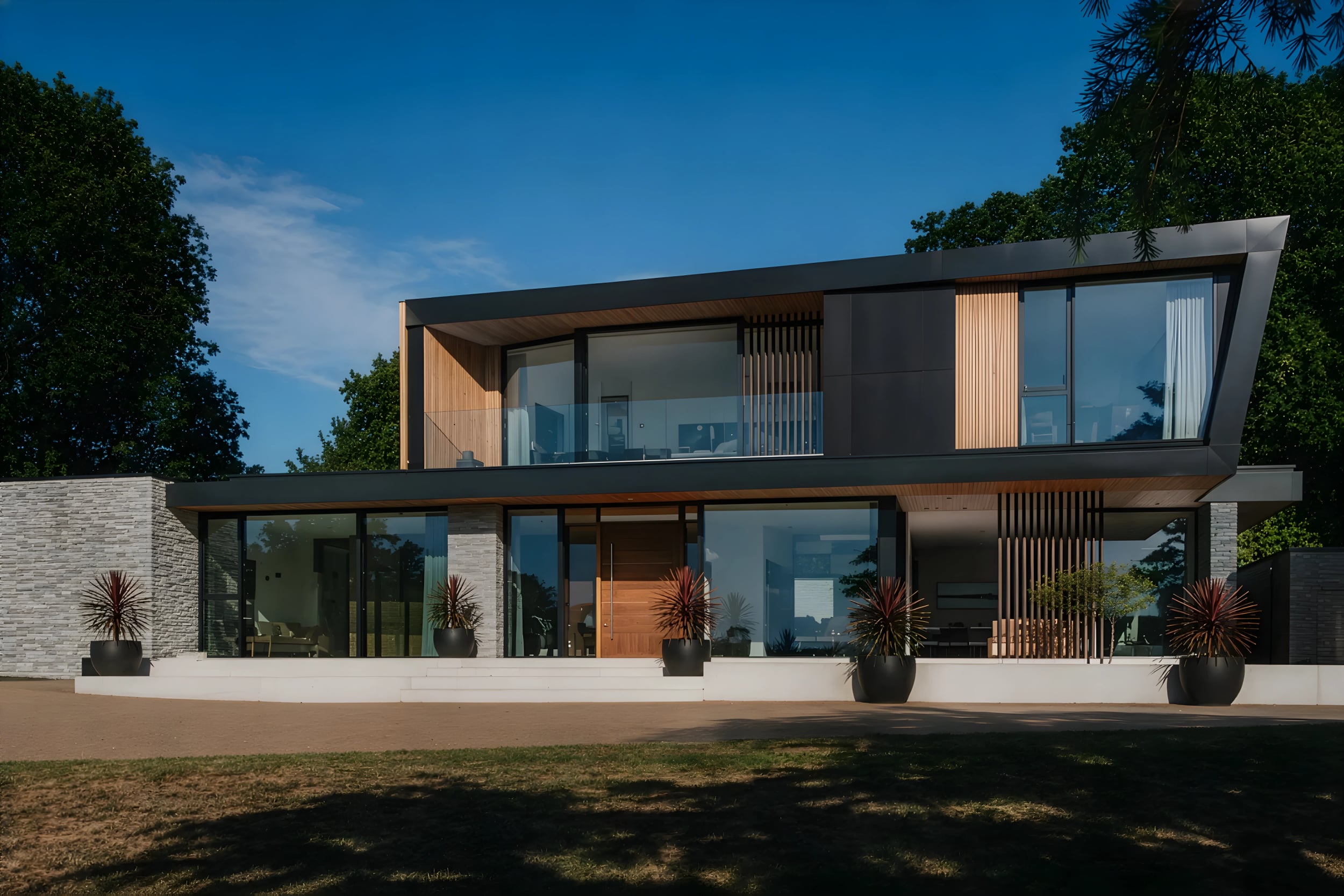
Every site offers an opportunity to create a meaningful relationship between architecture and landscape. Before a design takes shape, we look closely at the qualities already present in the setting.
Views, trees, topography, planting, boundaries, and natural light all influence how a home should respond. These details often become the starting point for the architectural direction.
Rather than treating the garden as something separate, we see landscape as an extension of the home. Interior and exterior spaces should feel connected through movement, views, and material choices.
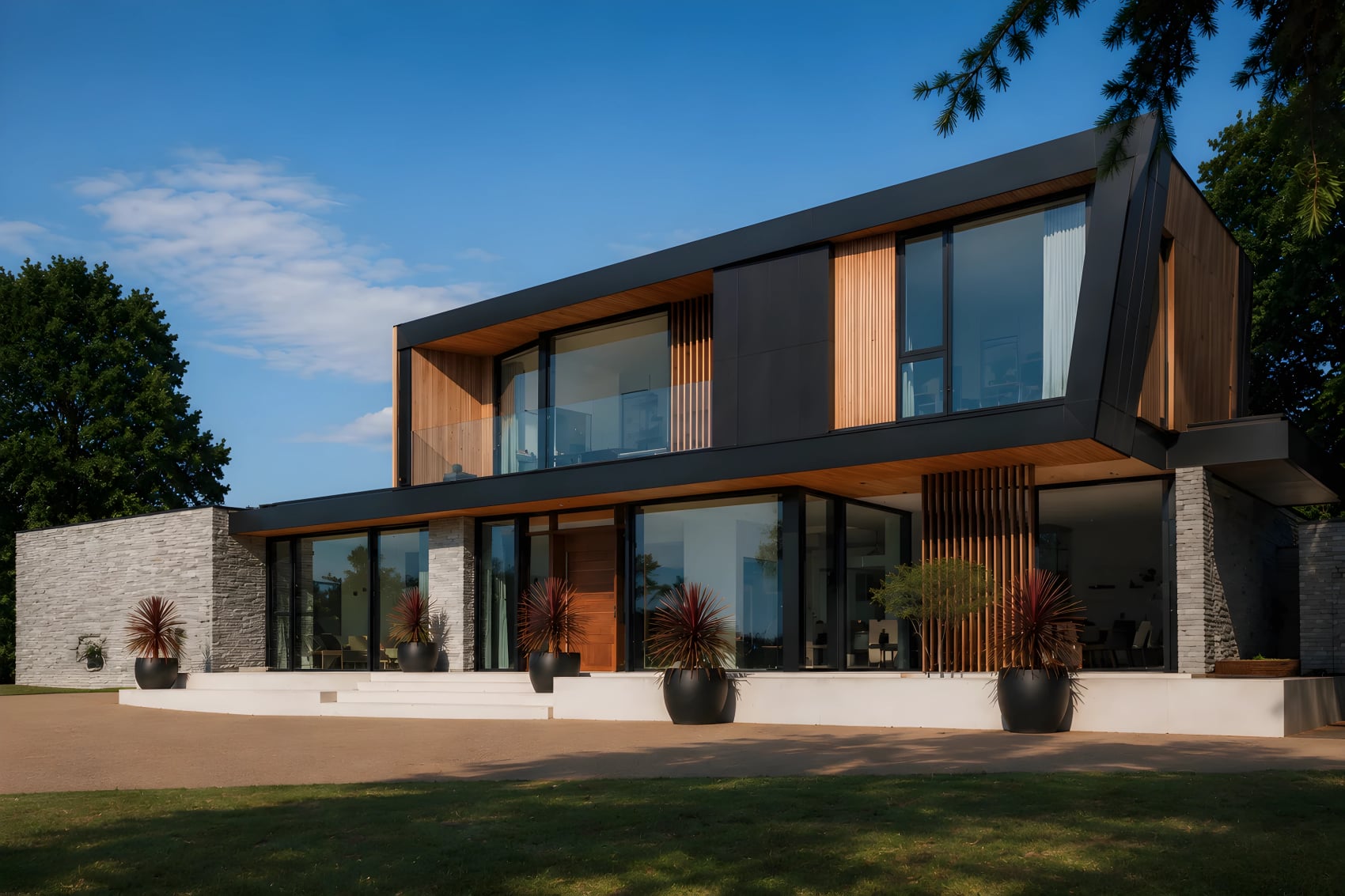
The placement of openings plays an important role in this relationship. A window can frame a distant view, bring attention to planting, or create a quieter moment of connection with the outside.
Transitions between inside and outside are equally important. Terraces, courtyards, covered thresholds, and garden paths can help soften the boundary between architecture and landscape.
Landscape brings qualities that buildings cannot create alone. Seasonal change, movement, texture, and natural growth all add depth to the experience of a home.
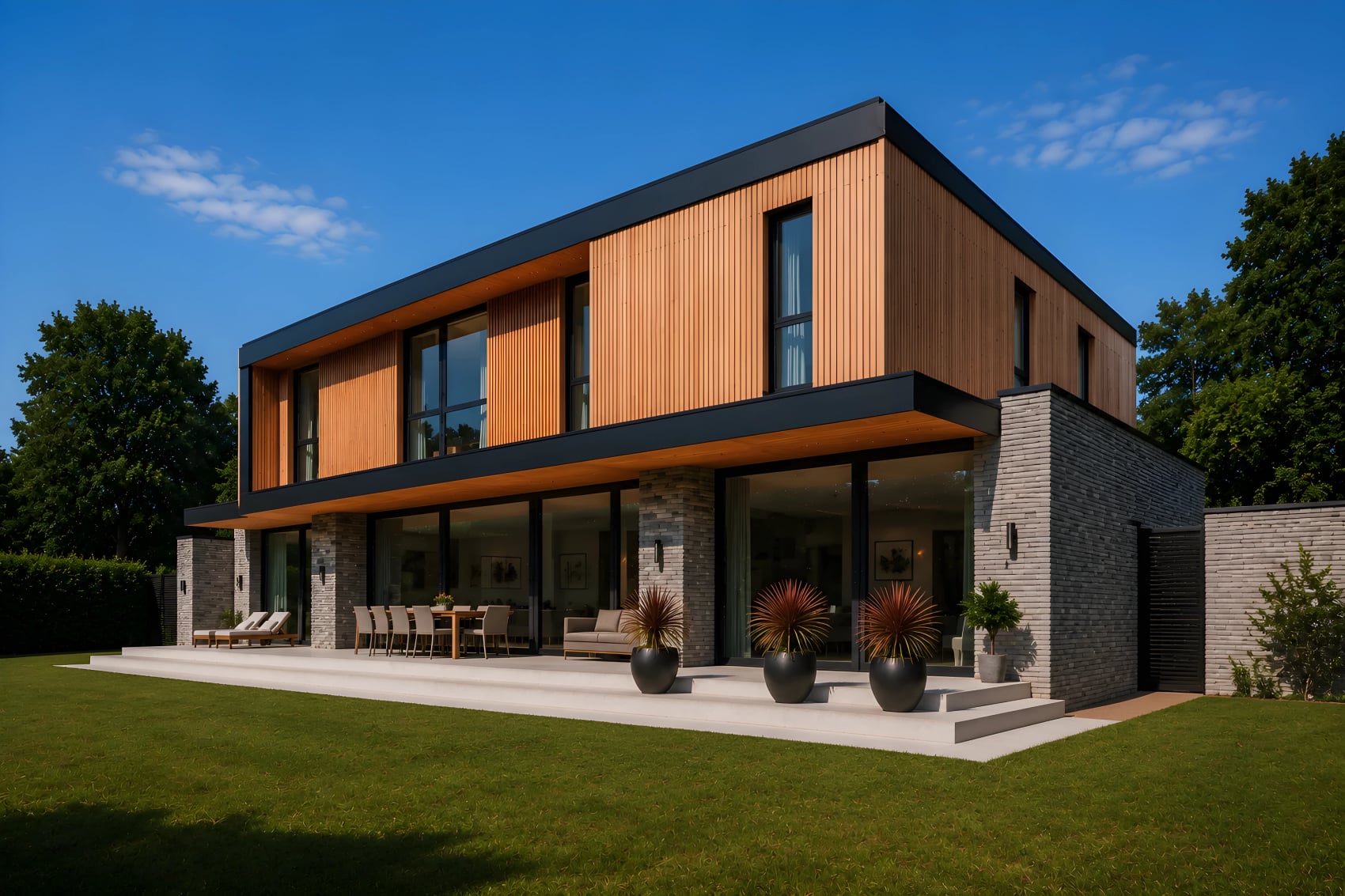
As a project develops, we consider how the surrounding environment will change over time. Planting matures, materials weather, and the relationship between building and site becomes more established.
The most successful homes rarely feel imposed on their surroundings. They feel grounded, balanced, and shaped by the place they belong to.
This does not always require large gestures. Often, small decisions around alignment, proportion, and orientation have the greatest impact.
When architecture and landscape are considered together, a home becomes more than a collection of rooms. It becomes part of a wider living environment.